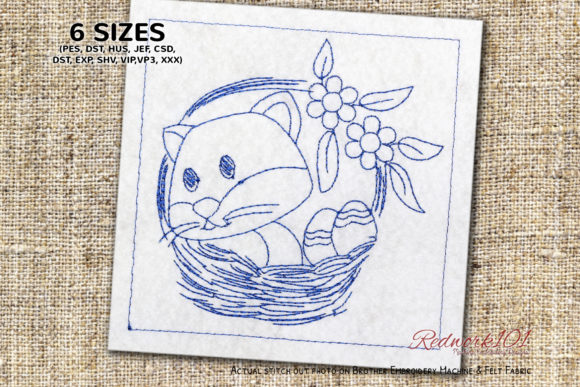
Cat in Easter Basket Redwork: A Designer’s Review
As an embroidery designer who has spent years digitizing and reviewing files for commercial use, I approach every new machine embroidery design with a critical eye. It is not enough for a design to simply look cute on a screen; it must perform flawlessly on fabric, withstand the rigors of washing, and elevate the brand identity of the business using it. Today, I am reviewing Cat in Easter Basket Redwork, a charming piece that holds significant potential for small business merchandise, particularly for those operating in the pet, bakery, or boutique sectors.
The first impression of this design is one of playful nostalgia. The redwork style, traditionally characterized by single-color stitching often in red thread on white fabric, evokes a sense of handmade heritage and rustic charm. When applied to a subject like a cat nestled in an Easter basket, the result is undeniably friendly and approachable. For a small business owner, this visual personality is a powerful tool. It signals warmth, attention to detail, and a personal touch that mass-produced graphics simply cannot replicate. However, the true test lies in its application across various substrates and its versatility as a branded asset.
Visual Personality and Brand Alignment
The aesthetic of Cat in Easter Basket Redwork leans heavily into the "handmade" and "classic" categories. This makes it an ideal candidate for businesses that want to project an image of artisanal quality. If you run a local bakery, a florist shop, or a pet grooming studio, this design aligns perfectly with a brand identity that values tradition and care. The simplicity of the redwork technique ensures that the design does not feel cluttered or overly modern, which can sometimes alienate customers looking for comfort and familiarity.
For Etsy sellers and crafters, this design serves as a strong seasonal anchor. While it is categorized under Easter, the imagery of a cat in a basket is versatile enough to extend into spring-themed collections. The key to leveraging this for small business merch is consistency. Using this design on your packaging, social media graphics, and physical products creates a cohesive visual story. Customers recognize the motif, building trust and recognition over time. The design feels premium not because of complexity, but because of its clean execution and thematic clarity.
Performance in Real-World Business Applications
When evaluating a digital embroidery file for commercial use, I always consider where it will be placed. Cat in Easter Basket Redwork shines in several specific applications:
- Embroidered Patches: This is perhaps the strongest use case. The bold lines of redwork translate beautifully to patches. You can create iron-on or sew-on patches for customer gifts or as add-ons to purchases. The optional box stitch mentioned in the product description allows for a clean border, which is crucial for patch durability and aesthetics.
- Apron Embroidery: For cafes and bakeries, staff uniforms are walking billboards. Embroidering this design on the chest or pocket of an apron adds a whimsical touch that customers love. It breaks the monotony of standard uniforms and encourages social media shares from patrons.
- Tote Bag Design: Canvas tote bags are a staple for boutique merchandise. The high contrast of redwork against natural or white canvas ensures visibility. It acts as a subtle yet effective brand identity marker without being overly aggressive.
- Cap Embroidery: Placing this on the front or side of a cap requires careful sizing. The design’s simplicity helps here, as complex details often get lost on curved surfaces. However, one must be mindful of the stitch density to avoid puckering the fabric.
In each of these scenarios, the design functions as more than just decoration; it is a strategic design asset. It enhances the perceived value of the finished product, turning a simple item into a collectible or a memorable gift. For custom apparel lines, this design can be the centerpiece of a limited-edition spring collection, driving urgency and engagement among buyers.
Technical Considerations and Production Notes
While the artistic merit of Cat in Easter Basket Redwork is clear, the technical execution requires attention to detail. As a designer, I advise checking several factors before running this on a production machine. First, consider the stitch density. Redwork designs typically have lower density, which is beneficial for lightweight fabrics but may require additional stabilizer support to prevent distortion on stretchy materials. Always test the design on the actual fabric you intend to use. Fabric texture plays a huge role in how the stitches lay; a rough linen will absorb the thread differently than a smooth cotton poly blend.
The product description notes that the outer box stitch is optional and that the color of the outer box varies. This flexibility is a double-edged sword. On one hand, it allows for customization to match your brand colors. On the other hand, it requires you to make deliberate choices. If you skip the color direct for the box, ensure that the remaining elements still form a cohesive shape. I recommend creating a printable mockup to visualize how the design looks with and without the border. This step is crucial for client approval and for ensuring that the design maintains its integrity at different sizes.
Another critical factor is the hoop size. Ensure that the design fits comfortably within your standard hoops without requiring excessive re-hooping, which can lead to misalignment. For small patch sizes, verify that the details of the cat’s face and the basket weave do not become indistinguishable blobs of thread. If the design is too detailed for a 2-inch patch, consider scaling it up or simplifying the digitization if you have the rights to edit the embroidery file.
Strategic Use for Maximum Impact
To maximize the return on investment for this design, integrate it into your broader marketing strategy. Use it on items that have high visibility and longevity. A well-made embroidered patch on a denim jacket or a backpack will be seen by hundreds of people. In contrast, using it on a disposable item might not yield the same brand exposure. For commercial embroidery projects, consistency is key. Use the same thread colors across all applications to maintain visual consistency. If your brand uses a specific shade of red, match the embroidery thread to that hex code precisely.
Be cautious when using this design on dark uniforms. Redwork traditionally relies on high contrast. If you must embroider on dark fabric, consider changing the thread color to a light cream or white to maintain visibility, or add a satin stitch border to separate the design from the background. Always confirm commercial licensing before using any digital file for business purposes. Ensure that the license allows for the number of physical items you plan to produce.
In conclusion, Cat in Easter Basket Redwork is a versatile and charming addition to any embroidery designer’s library. Its strength lies in its simplicity and emotional appeal. By carefully considering the technical aspects of production and strategically placing the design on high-value items like patches, aprons, and tote bags, small business owners can leverage this asset to enhance their brand identity and connect with their customers on a deeper level. Remember to test, mockup, and refine your approach to ensure that every stitch contributes to a professional and polished handmade product.