Reviewing Decorative Christmas Tree Redwork
As a designer who spends more time staring at stitch simulations than I care to admit, I have learned that simplicity is often the hardest thing to get right. When I first loaded the Decorative Christmas Tree Redwork file into my software, I wasn’t looking for complexity. I was looking for clarity. In the world of holiday embroidery, where glittery fills and dense satin stitches often compete for attention, a clean redwork design offers a refreshing pause. It speaks to tradition, minimalism, and the quiet confidence of a well-executed line.
This review comes from the perspective of someone who has stitched thousands of designs for clients, from boutique sweatshops to individual Etsy sellers. I am evaluating this design not just as a digital asset, but as a physical product component. How does it hold up on a tote bag? Does it look professional on a baby onesie? Is it worth the machine time for a small shop owner? Let’s dive into the practical realities of using this design in real-world projects.
The Aesthetic Appeal: Less Is More
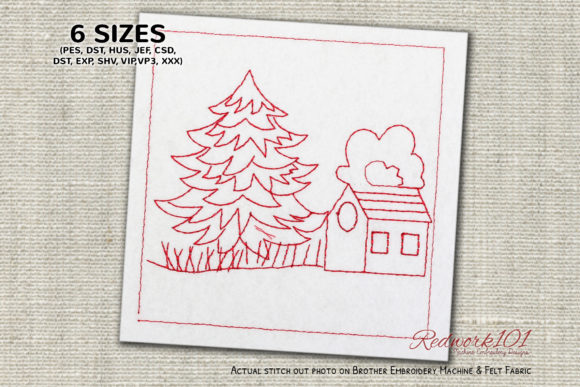
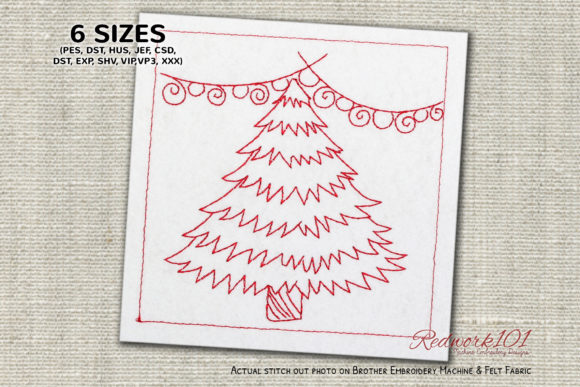
The immediate impression of the Decorative Christmas Tree Redwork is one of nostalgic charm. Redwork, historically rooted in early American embroidery, relies on a single color thread—traditionally red—against a neutral background. This design captures that spirit perfectly. The lines are crisp, and the silhouette of the tree is recognizable without being overly detailed.
For a craft business owner, this aesthetic is powerful. It fits seamlessly into the "farmhouse chic" or "modern rustic" trends that continue to dominate home decor and apparel markets. Unlike complex multi-color designs that can look muddy if the tension is slightly off, this design relies on the precision of the running stitch. It feels intentional. When I imagine this stitched onto a natural linen tea towel or a cream-colored canvas tote, the contrast creates a high-end, artisanal look that customers associate with quality handmade products.
Real-World Application: From Mockup to Finished Product
To truly test a design, you have to move beyond the screen. I recently considered this design for a custom order involving a set of holiday kitchen towels. The client wanted something festive but subtle, nothing that would clash with their existing decor. The Decorative Christmas Tree Redwork was an ideal candidate. Because it lacks dense fill stitches, it lays flat against the fabric. This is crucial for items like tea towels or aprons that need to remain functional and soft to the touch.
I also evaluated its potential for apparel. For sweatshirt embroidery, simplicity is key. A bulky design on a chest pocket can feel heavy and distort the fabric. This redwork tree, being lightweight in terms of stitch count, sits beautifully on fleece or cotton blends. It works equally well as a small accent on a cap or as part of a larger arrangement on a pillow cover. For Etsy sellers looking to expand their holiday collection, this design offers versatility. It can be scaled down for baby embroidery on onesies or scaled up for a statement piece on a throw blanket, provided the resolution holds up.
However, context matters. While the design is versatile, it shines brightest when paired with the right materials. On a textured fabric like waffle knit or heavy linen, the single-line stitches can get lost if the thread weight is too thin. Conversely, on smooth cotton or polished polyester, the lines pop with definition. Understanding your fabric texture is half the battle in achieving a professional finished product.
Technical Considerations and Stitching Performance
From a technical standpoint, redwork designs are generally forgiving, but they are not immune to errors. The primary concern with any design composed largely of running stitches is registration. If your machine’s timing is slightly off, or if the fabric shifts during stitching, the lines may not connect perfectly. This is why testing on scrap fabric is non-negotiable. Before committing to a final product, always run a test stitch-out to check for gaps or overlaps.
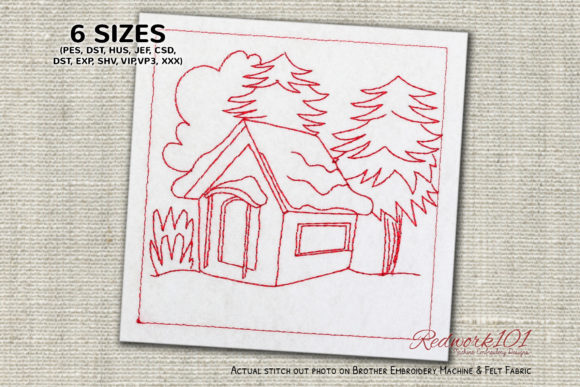
The product description notes that the box stitch shown in promotional images is optional. This is a significant feature for flexibility. If you are creating an embroidered patch, keeping the border might provide a clean edge for cutting or merrowing. However, if you are stitching directly onto a garment, removing the box allows the tree to float more naturally on the fabric. I recommend experimenting with both versions. For a modern look, skip the box. For a traditional, framed appearance, keep it.
Stabilizer choice is another critical factor. Since redwork lacks the density of fill stitches, it provides little structural support to the fabric itself. Using a cut-away stabilizer is advisable for stretchy fabrics like t-shirts or sweatshirts to prevent distortion over time. For woven fabrics like linen or cotton, a tear-away stabilizer may suffice, but ensure it is removed carefully to avoid pulling the stitches out of alignment.
Navigating Limitations and Fabric Choices
While this design is robust, it has limitations. It is not suitable for dark fabrics unless you change the thread color. The essence of redwork is the contrast between the red thread and the light background. Stitching red on black or navy will result in poor visibility and a loss of the design’s character. If you must use dark fabric, consider switching to a bright white or gold thread, though this moves away from the traditional redwork aesthetic.
Additionally, be cautious with very thin or slippery fabrics. Silk or lightweight rayon may pucker under even the lightest stitch density. In such cases, using a water-soluble topping can help keep the stitches lying flat and prevent the needle from pushing the fabric into the throat plate. For curved surfaces like caps, ensure you are using the appropriate hoop and stabilizer combination to maintain the shape of the tree. Distortion on a curved surface can make the tree look leaning or uneven, which detracts from the professional look.
Commercial Viability and Brand Consistency
For commercial embroidery and small shop products, consistency is king. The Decorative Christmas Tree Redwork offers a reliable way to produce uniform items quickly. Because it uses fewer thread changes and less machine time than complex multi-color designs, it can improve your production efficiency. This is particularly valuable during the busy holiday season when turnaround times are tight.
Moreover, this design enhances brand consistency for businesses focused on minimalist or heritage-style branding. It pairs well with other simple motifs, such as snowflakes or stars, allowing you to create cohesive collections. Whether you are selling digital embroidery files or finished handmade products, the clean lines of this design convey professionalism. It suggests that the maker values precision and tradition, qualities that resonate with buyers looking for meaningful personalized gifts.
Final Verdict for Designers and Makers
In conclusion, the Decorative Christmas Tree Redwork is a solid addition to any designer’s library. It is not flashy, but it is effective. It performs well across a variety of applications, from home decor to apparel, provided you pay attention to fabric choice and stabilization.
Before using this design for client work or commercial sales, always verify the licensing terms. Ensure you have the right to use the digital embroidery file for finished products or resale. Check the recommended hoop size to ensure it fits your machine’s capabilities. And most importantly, stitch it out. See how the thread colors interact with your chosen fabrics. Test the optional box stitch. Only through hands-on experimentation can you fully unlock the potential of this design.
For the experienced maker, this design is a tool. It is a way to evoke holiday spirit without shouting. It is a reminder that sometimes, the most impactful designs are the ones that let the craftsmanship speak for itself. If you are looking to add a touch of classic elegance to your holiday offerings, this redwork tree is worth considering.