Reviewing Wooden Christmas House Redwork for Sweatshirts
As an embroidery designer who has spent years digitizing and testing patterns for boutique apparel, I approach every new machine embroidery design with a critical eye. It is not just about whether the pattern looks cute on a screen; it is about how it translates to fabric, how it withstands washing, and ultimately, how it elevates a brand’s identity. Recently, I evaluated the Wooden Christmas House with Tree Redwork for a potential inclusion in a limited-edition holiday sweatshirt drop for a small online shop. The results were surprisingly versatile, offering a blend of rustic charm and modern minimalism that appeals to today’s conscious consumer.
First Impressions: Mood and Aesthetic Appeal
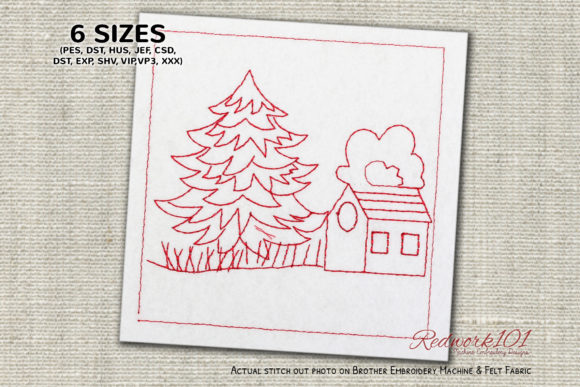
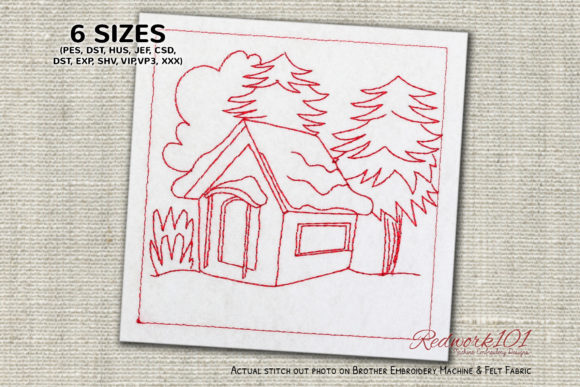
The initial visual impact of the Wooden Christmas House with Tree Redwork is one of understated elegance. Unlike heavily saturated, multi-colored holiday motifs that can sometimes feel chaotic or dated, this redwork style relies on single-color stitching to create depth and character. The design features a quaint wooden house accompanied by a tree, evoking feelings of nostalgia, warmth, and cozy winter evenings. For a boutique brand aiming to capture the "slow living" or "hygge" aesthetic, this design is a perfect fit. It feels less like a loud advertisement for the holidays and more like a subtle, decorative nod to the season.
The layout is balanced, with the house and tree creating a harmonious silhouette. Because it is described as redwork, the stitch personality is likely linear and open, avoiding the heavy density that can stiffen soft fabrics. This openness allows the fabric texture of the garment to shine through, which is crucial for premium apparel. When I imagine this stitched onto a high-quality cotton fleece, the result is sophisticated rather than childish. It strikes a balance between playful and minimal, making it suitable for a wide demographic, from young adults seeking trendy streetwear to older customers appreciating traditional craftsmanship.
Application on Sweatshirts and Hoodies
One of the primary concerns for any Etsy seller or apparel decorator is versatility. How does the design perform across different garment colors and styles? In my assessment, the Wooden Christmas House with Tree Redwork excels in adaptability. On neutral sweatshirts, such as oatmeal, heather gray, or cream, the design acts as a focal point without overwhelming the wearer. If stitched in a deep forest green or classic red thread, it provides a beautiful contrast that feels organic and grounded.
For dark fabric options like charcoal or navy, this design requires careful consideration of thread colors. A bright white or metallic gold thread could transform the piece into something truly striking, offering a bold pop against the darkness. Conversely, using a tonal thread, such as stitching a dark brown house on a black hoodie, creates a subtle, textured effect that appeals to customers who prefer understated luxury. This tonal approach is particularly effective for oversized hoodies, where the goal is often comfort and subtle branding rather than loud graphics.
Placement is another critical factor. While a central chest placement is standard, this design’s compact nature makes it ideal for left-chest positioning, mimicking the look of a traditional embroidered logo. This placement enhances the perceived value of the custom apparel, making it look like a established brand piece rather than a one-off craft project. Additionally, the design could work beautifully as a sleeve accent or even repeated in a smaller scale on the back yoke, offering unique styling options for a small shop product line.
Technical Considerations for Production
From a technical standpoint, working with redwork designs on thick fabrics like sweatshirt fleece requires attention to detail. The description notes that the "Box Stitch shown in picture is optional" and that the outer box color may vary. This flexibility is a significant advantage for production efficiency. Skipping the optional box stitch can reduce run time and minimize bulk, which is essential for maintaining the soft hand-feel of the garment. However, if the box is part of the framing, it must be digitized with care to ensure it does not pucker the fabric.
Stitch density is a major concern when embroidering on knit fabrics. Since redwork typically involves running stitches or light satin stitches, the risk of perforation or distortion is lower than with dense fill stitches. However, proper stabilization is non-negotiable. I recommend using a cut-away stabilizer for sweatshirts to ensure long-term durability, especially since these garments are washed frequently. A tear-away might suffice for lighter fabrics, but for a premium handmade product intended to last, cut-away provides the necessary support to keep the stitches flat and secure.
Another practical consideration is the hoop size. While the exact dimensions are not specified in the provided details, designers must verify the hoop requirements before purchasing the digital embroidery file. Ensuring the design fits within standard hoop sizes (such as 4x4 or 5x7 inches) allows for greater flexibility in production setups. Furthermore, checking the smallest readable size is vital. If the design includes fine details in the tree branches or house windows, shrinking it too much for a pocket placement might cause those details to merge or break. Always test stitch on scrap fabric identical to your production material to gauge readability and tension.
Enhancing Brand Identity and Value
Incorporating a well-chosen design like the Wooden Christmas House with Tree Redwork can significantly impact a brand’s perceived value. In the crowded marketplace of holiday apparel, differentiation is key. This design offers a distinct visual identity that separates a boutique brand from mass-market retailers. It signals to the customer that attention has been paid to detail, quality, and aesthetic cohesion. This builds buyer trust and encourages repeat business, as customers associate the brand with thoughtful, high-quality curation.
For commercial embroidery businesses, this design also offers excellent marketing potential. It lends itself well to lifestyle product photography, where the embroidered sweatshirt can be styled with rustic decor, warm lighting, and natural elements. These visuals are highly shareable on social media, driving engagement and organic reach. Moreover, providing printable mockups or high-resolution images of the finished product can help online sellers visualize the item, reducing hesitation in the buying process.
Ultimately, the success of this design lies in its ability to evoke emotion. It is not just a pattern; it is a storytelling device that connects the wearer to the warmth of the season. By choosing a design that balances tradition with modern simplicity, boutique owners can create pieces that resonate deeply with their audience. Whether used for a cozy family matching set or a chic solo statement piece, the Wooden Christmas House with Tree Redwork proves that less is often more in the world of holiday fashion.
Final Designer Notes
Before moving forward with production, always confirm the specific file formats included in the design assets package to ensure compatibility with your embroidery machines. Check the license terms to confirm rights for commercial use, especially if you plan to sell the finished garments. Pay close attention to the note regarding the optional box stitch and color variations, as these elements can drastically change the final look. With proper testing and thoughtful placement, this design has the potential to become a staple in your seasonal collection, delighting customers with its charm and quality.